
Compliant by Design: Automated FHIR Auditing
How to implement structured, FHIR-native audit trails that satisfy HIPAA and GDPR requirements using the AuditEvent resource.
FHIR
AuditEvent
Compliance
Testing a FHIR server is notoriously difficult. Unlike a simple CRUD app, a FHIR server involves complex resource relationships, search parameter indexing, and versioned histories.
While unit tests are great for logic, they don’t give you confidence that your API actually behaves like a FHIR server should. For that, we need Behavioral Integration Testing.
Karate is a testing framework that allows you to write API tests using a Gherkin-like syntax. It is perfect for FHIR because:
Let’s test the creation and retrieval of a Patient. Create a file called patient.feature:
Feature: FHIR Patient API

  Background:
    * url 'http://localhost:8080/fhir'

  Scenario: Create a patient and verify their name
    Given path 'Patient'
    And request { resourceType: 'Patient', name: [{ family: 'Doe', given: ['John'] }] }
    When method post
    Then status 201
    * def patientId = response.id

    Given path 'Patient', patientId
    When method get
    Then status 200
    And match response.name[0].family == 'Doe'
In the hapi-fhir-groovy repo, I’ve integrated Karate into the docker-compose stack. This ensures tests run against a clean, “real-world” environment.
Run them with a simple command:
make integration-tests
Since our server supports Dynamic Scripting, we can use Karate to verify that a new Groovy script works as expected:
Scenario: Verify dynamic business rule
  # 1. Upload a script that enforces a specific identifier
  Given path 'Configuration'
  And request read('identifier-check-script.json')
  When method post
  Then status 201

  # 2. Try to save a patient without that identifier
  Given path 'Patient'
  And request { resourceType: 'Patient', name: [{ family: 'Fail' }] }
  When method post
  Then status 400
  And match response.issue[0].diagnostics contains 'Missing required identifier'
In a production healthcare environment, we don’t just “test”; we certify. Karate allows us to create a certification suite that verifies:
By using Karate, you create a “living documentation” of your API’s capabilities. These tests can be shared with integration partners as a technical specification, ensuring that everyone knows exactly how the server will respond to specific clinical scenarios.
Check out the sample tests in the src/test/smoketest and docker-compose.yaml.
How to implement structured, FHIR-native audit trails that satisfy HIPAA and GDPR requirements using the AuditEvent resource.

Learn how to extend your HAPI FHIR server at runtime using Groovy scripts, allowing for hot-reloadable Interceptors and Resource Providers.

How to move beyond static test data by combining the scale of Synthea with the precision of Flexporter to build realistic, custom healthcare environments.

Exploring the strategic value of Logical Models in FHIR architecture: when to use them, why they matter, and how to implement them using FHIR Shorthand (FSH).

A deep dive into the three powerful methods for including graphical representations in FHIR Implementation Guides: Mermaid, PlantUML, and the new automated Class Diagrams.

A suite of utilities designed to simplify the testing and validation of Mirth Connect transformations, ensuring reliable clinical data integration.
Testing and validation in Mirth.
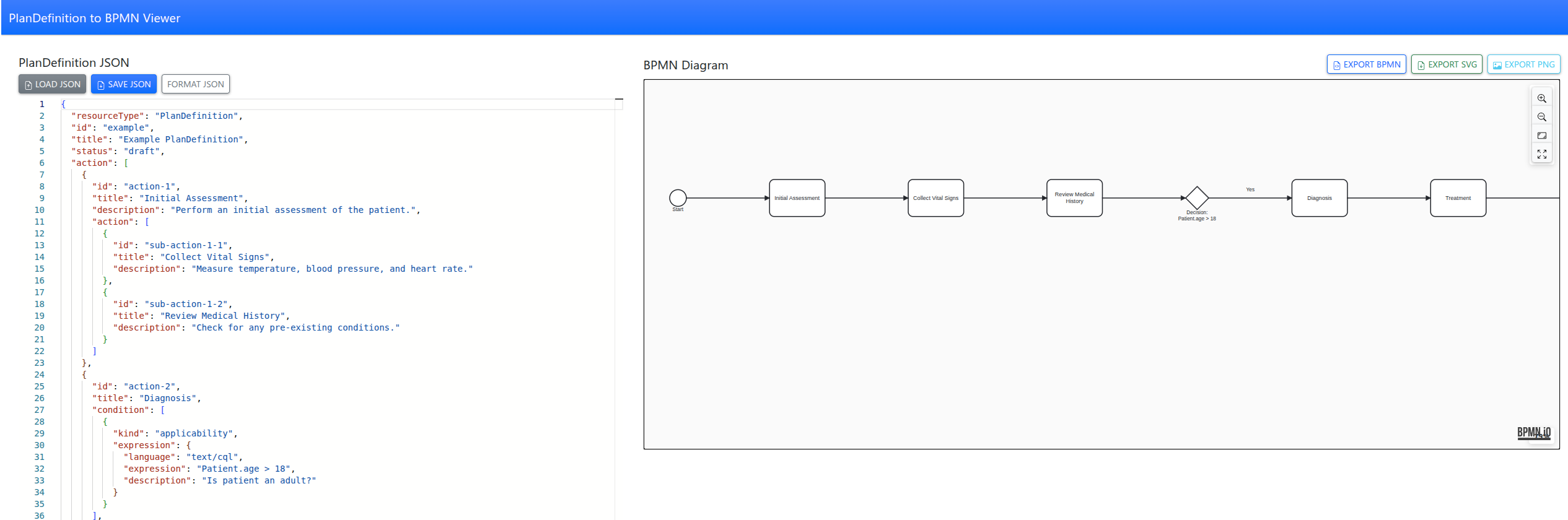
Tool to convert FHIR PlanDefinitions into interactive BPMN diagrams with a simple web app, making complex care pathways easy to visualize and understand.