The Data Highway: How FHIR Saved Our Launch and Our Sanity
The evolving regulatory landscape, highlighted by initiatives like the FDA’s “Live Data” integration pilots, has set a new bar for clinical data agility. For a new EDC platform, this shift wasn’t a hurdle but a validation of our technical direction. By anchoring our entire EDC/PRO stack on a FHIR-native architecture, we moved past the old world of proprietary schemas and brittle ETL pipelines, building a system that is future-proof by design.
We didn’t just meet the deadline; we owned it. Here is the “no-fluff” breakdown of how we did it.
Part 1: The Architect’s Report, Surviving the “Live Data” Mandate
Moving to FHIR wasn’t a technical pivot; it was a survival strategy. By treating the Implementation Guide (IG) as our core data model, we eliminated the translation layer between “what the regulator wants” and “what the code does.”
The “Cheat Codes” That Actually Worked
SDC: The Automation Engine
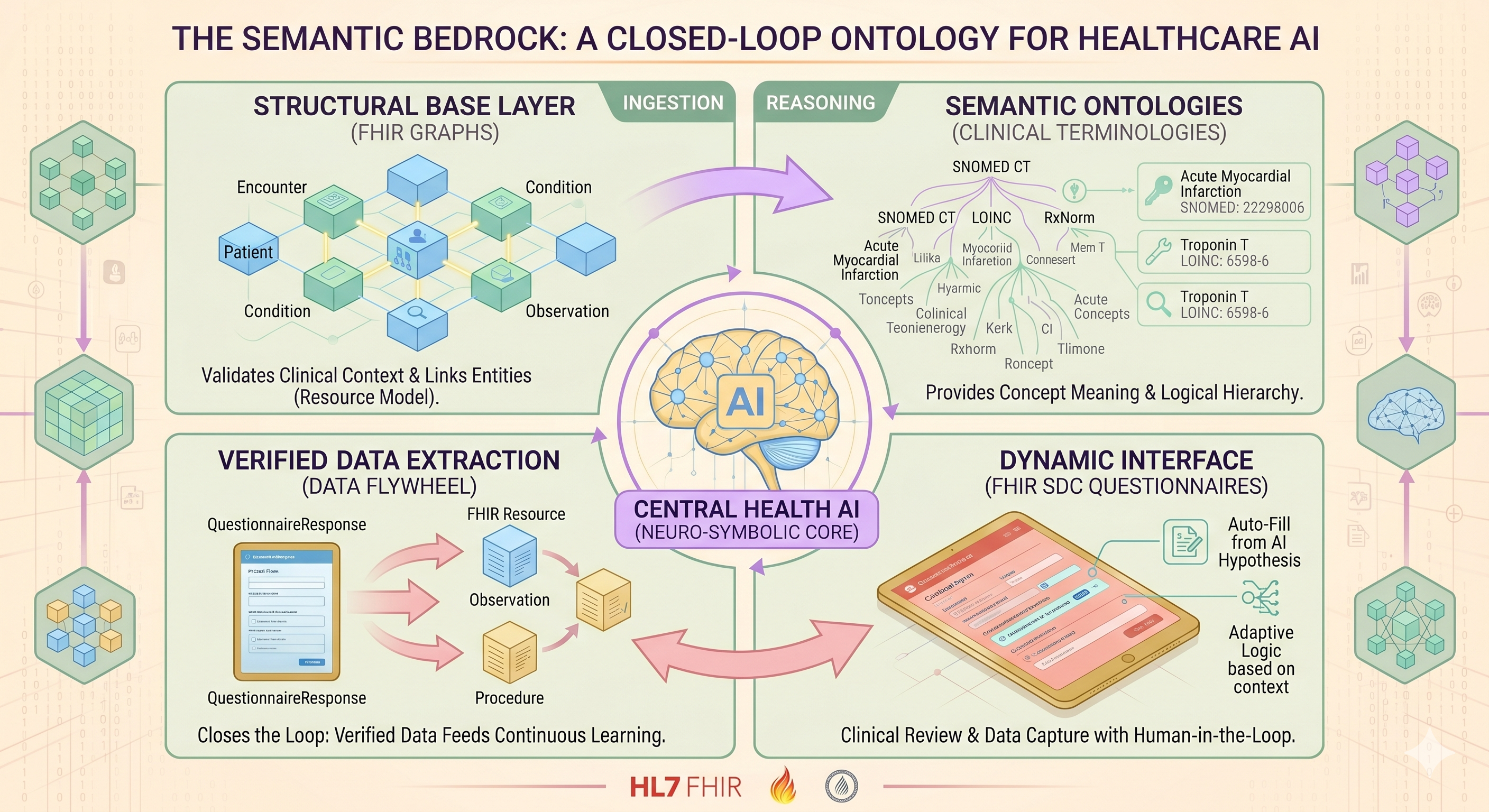
We used Structured Data Capture (SDC) to handle the heavy lifting. Instead of writing custom skip-logic for every form, we embedded the intelligence directly into the Questionnaire resources. When the FDA called for real-time EHR integration, SDC allowed us to “auto-populate” source data without building a hundred brittle connectors.
ViewDefinitions: FHIR for Humans
Let’s be honest: FHIR’s nested JSON is a masterpiece of interoperability but a nightmare for analytics. ViewDefinitions allowed us to flatten that complexity into clean, tabular views. We gave the biostatisticians SQL-ready data in real-time, effectively ending the “where is this variable hidden?” Slack threads.
Synthea: Our Pre-Launch Secret Weapon
We didn’t wait for clinical sites to go live to test our scale. We flooded the system with Synthea-generated patients that mirrored our IG. We simulated three years of longitudinal data in a week, breaking our ingestion pipeline in staging so it wouldn’t break in production.
Part 2: Engineering Leadership – Killing the “Translation Tax”
As Head of Engineering, my biggest bottleneck is usually the Translation Tax—the hidden cost of explaining clinical requirements to devs and technical constraints back to clinical teams. Using the FHIR IG as our “North Star” changed everything.
The IG as a Universal Language
In the past, the data model lived in a DBA’s head or a messy Wiki page. Now, the Implementation Guide IS the data model. When a product manager asks for a new data point, we don’t argue about database columns; we look at the Profile. It has unified the mental models of our backend, frontend, and QA teams.
Multi-language without the Multi-misery
The new multilingual capabilities of FHIR IGs saved us months. We handled global localization by embedding translations directly into the metadata. We didn’t build a “translation management system”—we just updated the IG, and the UI updated itself. It turned a high-risk manual process into a routine deployment.
Scaling the Team, Not the Confusion
Onboarding new engineers was significantly faster because we used an open standard. We didn’t have to teach them “The Secret Way” we store blood pressure; we just taught them FHIR. Between the community support on Zulip and existing open-source validators, it felt like we had an extra ten engineers on staff.
The Verdict
We’ve moved from building a data silo to a data highway.
The architecture is cleaner, the team is less stressed, and for the first time, our tech stack actually matches the speed of the FDA’s vision. We’ve built a system that doesn’t just store data, it participates in the healthcare ecosystem.